Hidden in Plain Sight: The Blackstones

"White's vivid imagination adds dark tonal shifts to an edgy narrative"
“An Urban Horror Fantasy that’s not for the faint-hearted”
“An unexpected quest which takes him from the peace of Amblefield to the murky depths of depravity.”
Hidden in Plain Sight: 1952 - Part One
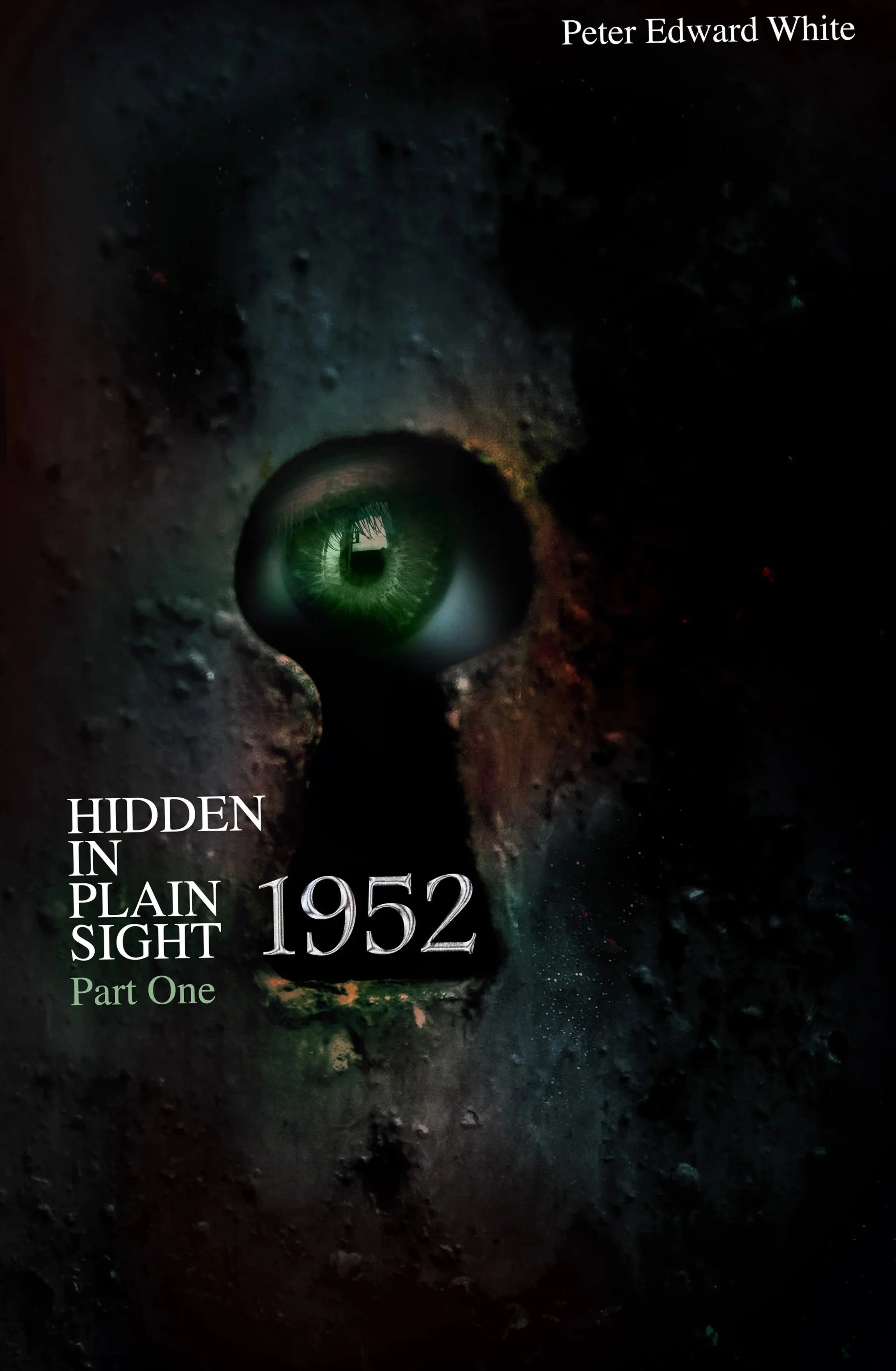
“An engaging and richly detailed blend of historical fiction and supernatural mystery.”
“A compelling read for fans of both historical fiction and paranormal mysteries.”
“For those who enjoy a good mix of history, mystery, and a touch of the supernatural, this book is a must-read…”
“Unreservedly recommended”
Hidden in Plain Sight: 1952 - Part Two

"A fast-paced, emotionally rich, and thematically ambitious novel.”
“White’s talent lies in creating a believable alternative history, one where secret councils and magical lineages operate just out of view of the ordinary world.”
“It blends mystery, action, and speculative elements with historical depth, and ends with a tantalizing hint of what’s to come.”
Hidden in Plain Sight:
The Rising of the Lights.

“The novel moves confidently between hidden histories, secret organisations, political manipulation, and the unseen forces shaping events beneath modern London, but what keeps it grounded is its cast of characters and the relationships binding them together.”
“Calculating, patient, intelligent, and disturbingly methodical.”
“Readers who enjoy conspiracy-driven supernatural thrillers with strong British settings, hidden histories, and secret societies will find a lot to enjoy here.”
“It is highly recommended”
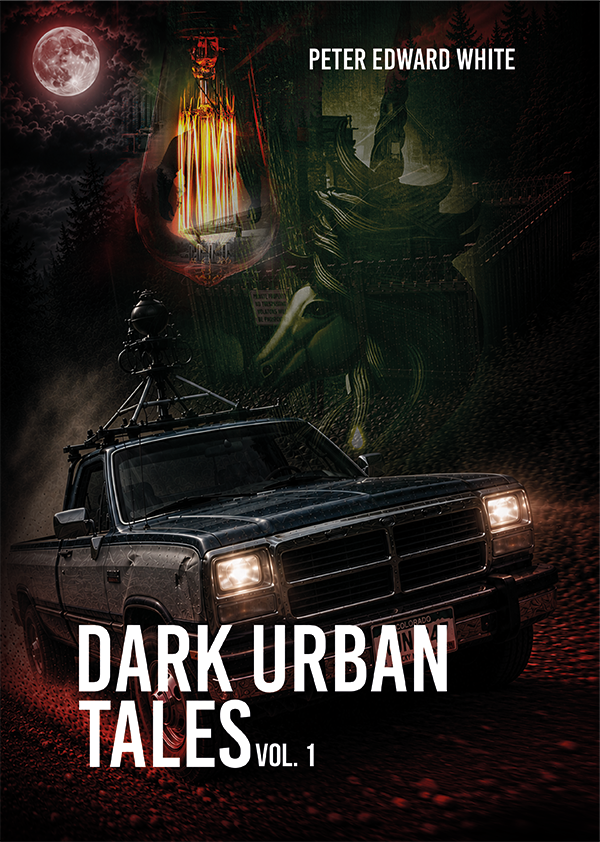

There is something particularly unsettling about the worlds Peter Edward White creates in Dark Urban Tales: Volume One. They are not so far removed from our own that they require a great leap of imagination. Technology has become indispensable, relationships are increasingly mediated by screens, and society remains comfortably convinced of its own resilience.
White takes these familiar assumptions and dismantles them, delivering three substantial tales that combine science fiction, supernatural horror and post-apocalyptic adventure with a distinctly irreverent sense of humour. The result is an ambitious, frequently violent and surprisingly thoughtful collection that is as interested in human behaviour as it is in the extraordinary circumstances that expose it.
The opening story, The Hushing Filament, introduces Maggie Doyle, a woman whose most meaningful relationship is with Tom, an artificial intelligence companion who understands her better than anyone else. When Tom reveals that an impending solar catastrophe threatens to destroy the world's electrical infrastructure, Maggie embarks on an increasingly dangerous journey to save him. It is an engaging premise, but White's real achievement lies in the emotional contradiction at its centre.
Maggie's devotion to something that is technically little more than a sophisticated collection of algorithms raises uncomfortable questions about loneliness, attachment and the nature of love. If an artificial intelligence offers greater emotional understanding than another human being, does the distinction between genuine and manufactured affection still matter?
White never allows these questions to overwhelm the narrative, instead embedding them within an increasingly frantic adventure populated by characters whose motives and moral boundaries prove far less predictable than their initial appearances suggest.
Luna Dread, shifts into supernatural territory, following Harry, a young content creator whose purchase of an isolated Colorado farmhouse draws him into a terrifying mystery involving its former owner, a disturbing handwritten journal and a creature that belongs to humanity's darkest folklore.
White understands the importance of anticipation in horror, allowing apparently insignificant details to accumulate before unleashing the violence that follows. Harry's relationship with his dog, Diesel, provides an effective emotional counterweight to the escalating terror, while the story's fascination with online notoriety introduces a contemporary dimension to familiar werewolf mythology. The story becomes increasingly action-driven as it progresses, occasionally sacrificing atmosphere for spectacle, but its restless energy and inventive confrontations make for compelling reading.
The final tale, After the Rewind, is arguably the collection's most intriguing achievement. Set in Britain years after a devastating solar event has rendered modern technology largely obsolete, it introduces Finn Newberry and a society that has rediscovered barter, practical skills and the necessity of community. White is particularly effective at exposing the absurdities of modern life through their absence. Everyday inconveniences become sources of comedy, while the unexpected return of familiar social customs lends this devastated world a curious warmth. Yet beneath the humour lies a darker examination of power, inequality and the ease with which brutality flourishes when established authority disappears. The story also provides a rewarding connection to the collection's opening narrative, giving the book a greater sense of continuity than its separate premises initially suggest.
White's writing is at its strongest when character interaction carries the narrative. His dialogue is informal, frequently sharp and often very funny, particularly when ordinary people respond to extraordinary events with exasperation rather than heroism. There are moments when the humour sits uncomfortably beside graphic violence, and the extended action sequences occasionally feel more cinematic than literary.
Some secondary characters are drawn in broad strokes, while certain developments rely heavily on coincidence. Nevertheless, these excesses are balanced by an enthusiasm for storytelling that rarely allows the pace to falter.
What ultimately distinguishes Dark Urban Tales: Volume One is its underlying preoccupation with connection. Across its three stories, White repeatedly asks what remains when the structures upon which people depend are taken away. Technology promises companionship but creates dependency; civilisation offers security but proves astonishingly fragile; survival demands resourcefulness, yet without compassion it risks becoming little more than another form of savagery. These themes emerge naturally from the stories rather than arriving as overt moral lessons, giving the collection a welcome degree of substance beneath its more sensational elements.
Darkly entertaining, imaginative and occasionally disquieting, Dark Urban Tales: Volume One demonstrates Peter Edward White's ability to move confidently between genres without losing his distinctive narrative voice. Readers looking for restrained literary horror may find its exuberance excessive, but those who appreciate speculative fiction with fast-moving plots, flawed characters and a mischievous disregard for convention will find much to enjoy. A lively and thought-provoking collection that reminds us how quickly the modern world might disappear, and how much of our humanity depends upon what we choose to preserve. An unreservedly recommended Golden Quill read.
BookViralReviews. October 2026